10 Best Yoga Poses for Stress Relief and Relaxation
Feeling stressed, overwhelmed, or mentally exhausted? Taking a few minutes for yourself may help you feel calmer. Yoga combines gentle…
Read More →

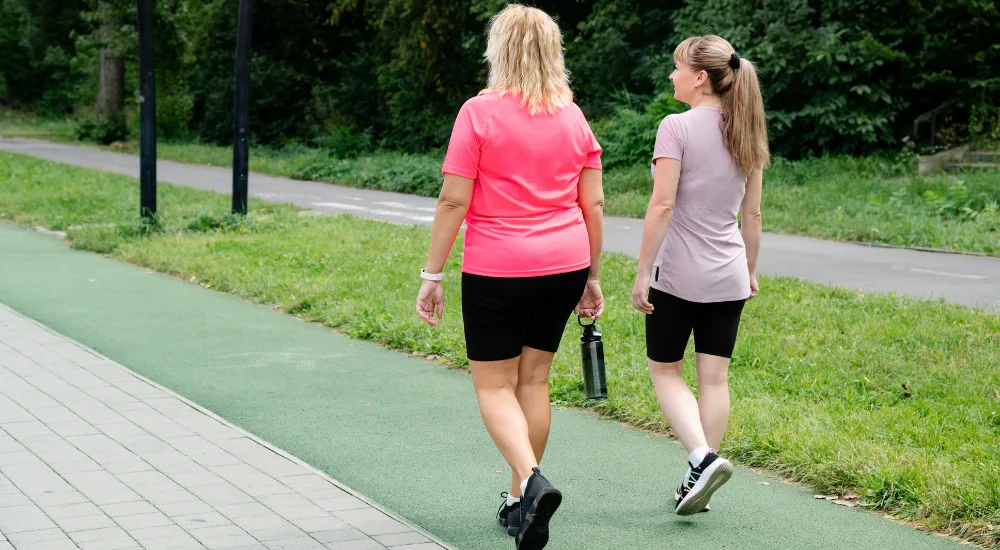
Adults should aim for at least 150 minutes of moderate activity, such as brisk walking, each week.
For weight loss, gradually building towards 300 minutes of activity a week may help.
Walk at a brisk pace where you can talk but not sing.
You do not need 10,000 steps a day; moving more than you do now is what counts.
Walking works best for weight loss when combined with balanced eating.
For walking for weight loss, a practical goal is about 30 minutes of brisk walking on most days, building gradually towards 45–60 minutes. Health guidelines recommend at least 150 minutes of moderate activity a week for general health. For weight loss and keeping weight off, Cleveland Clinic notes that the US Physical Activity Guidelines suggest more than 300 minutes a week.
If you are new to exercise, start with 10–15 minutes and add a little more each week. Walking burns energy, but it works best for weight loss when combined with balanced eating. You do not need a gym or special equipment: comfortable shoes and a routine you can stick with are enough to begin.
There is no single daily target that guarantees weight loss for everyone, but weekly time goals make it easier to plan. The World Health Organization (WHO) recommends 150–300 minutes of moderate activity a week for adults, and advises starting small and building up gradually if you are not active now.
Here is one way to build up:
| Stage | Suggested walking time |
| Beginner | 10–15 minutes a day, several days a week |
| Building a routine | 20–30 minutes on most days (about 150 minutes a week) |
| Bigger weight-loss goal | Gradually build to 45–60 minutes on most days (about 300 minutes a week) |
These are practical examples, not strict medical prescriptions. You can split your walking into shorter sessions, such as 15 minutes in the morning and 15 minutes in the evening.
No. Ten thousand steps is a popular target, but it is not a requirement for weight loss. Cleveland Clinic explains that not all steps are equal: slow steps while shopping add to your count but do little for fitness. Counting minutes of brisk walking can be more useful.
If you usually take 3,000 steps a day, gradually increasing that number is a good start. Focus on moving more than you do now, adding some brisk walking, and building a routine you can keep up.
Aim for a brisk pace that raises your breathing and heart rate but still lets you talk. The NHS describes a brisk walk as about 3 miles (5 km) an hour, faster than a stroll. Try the simple talk test:
Start at a comfortable pace and add short bursts of faster walking as your fitness improves. If you have a health condition that affects exercise, ask your doctor what intensity is right for you.
Walking uses energy. When you regularly use more energy than you take in from food and drinks, your body draws on stored energy, such as fat, which can lead to weight loss over time. Cleveland Clinic notes that a consistent walking programme can help reduce body fat, including fat around the waist, and help preserve muscle as you lose weight.
How many calories you burn depends on your body weight, speed, how long you walk and the terrain. There is no single figure that applies to everyone. As Cleveland Clinic’s exercise experts point out, you cannot out-walk an unhealthy diet: walking works best alongside balanced eating.
Walking does not cure diseases, but regular activity supports long-term health. According to the WHO, regular physical activity can help lower the risk of heart disease, high blood pressure, type 2 diabetes and some cancers, and can improve mental health and sleep.
Walking is not a replacement for prescribed medicine or medical treatment. If you have diabetes, heart disease, high blood pressure or another long-term condition, ask your doctor about a walking routine that is safe for you.
The best walking plan is one you can realistically follow. Start with a short, comfortable walk, fit it into a regular part of your day, and build up slowly. Increasing your time, pace or number of walking days a little at a time helps you avoid injury and stay motivated.
Comfortable, supportive shoes that do not cause blisters are all you need to start. The NHS suggests taking water, sunscreen and a hat on longer walks.
Most people can safely start with gentle walking. However, speak with a doctor before increasing your activity if you have heart disease, diabetes, high blood pressure, joint problems, balance difficulties or any condition that makes exercise hard. A doctor or physiotherapist can suggest a safe starting point.
Stop walking and seek urgent medical help (call 112 or 108 in India) if you have:
Also see a doctor if you have joint or muscle pain that does not settle after rest, or if you are losing weight without trying.
Walking is a simple, free and practical way to support weight loss and improve your overall health. You do not need to reach 10,000 steps or walk for an hour from day one. Start with a manageable amount, build up gradually towards 150–300 minutes a week, and walk briskly enough that you can talk but not sing.
Pair your walking with balanced eating and give yourself time to build a routine. The best walking plan is the one that fits your life and that you can keep doing.
Disclaimer
This article is for general educational purposes only and summarizes guidance from recognized health organizations such as the WHO, the NCI and other authoritative sources. Health research evolves, and individual risk varies with age, genetics, lifestyle and medical history. Nothing here is intended as medical advice, diagnosis, treatment or a judgement of anyone’s personal choices. Please consult a qualified healthcare professional before making decisions about your health. If you notice anything that needs updating, please contact us.