10 Best Yoga Poses for Stress Relief and Relaxation
Feeling stressed, overwhelmed, or mentally exhausted? Taking a few minutes for yourself may help you feel calmer. Yoga combines gentle…
Read More →

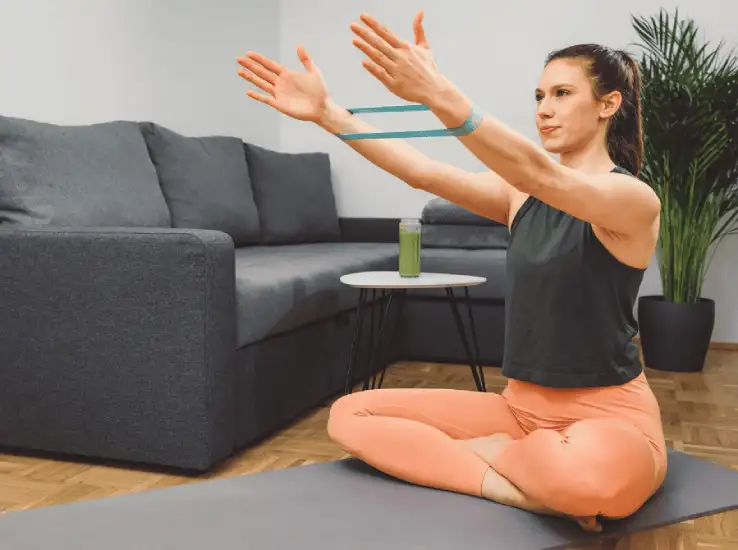
You do not need equipment to get started: Squats, push-ups, lunges, bridges, planks, bird-dogs, and marching can provide a practical full-body workout at home.
Start gradually and focus on form: Choose exercises appropriate for your fitness level, perform controlled repetitions, and increase difficulty progressively.
Exercise consistently for better health: Aim toward the recommended weekly activity levels while adapting exercise to your health, abilities, and fitness goals.
You do not need a gym membership or expensive equipment to become more active. Many effective exercises use your own body weight to strengthen muscles, improve balance, increase fitness, and support healthy weight management.
The key is choosing exercises that match your current fitness level and performing them with good technique. The CDC recommends that adults aim for at least 150 minutes of moderate-intensity physical activity each week, along with muscle-strengthening activities on at least two days. You can build toward this gradually rather than trying to do everything at once.
Stand with your feet about shoulder-width apart, push your hips back, bend your knees, and lower your body comfortably before standing again.
Benefits: Strengthens the thighs, glutes, and hips and improves lower-body strength needed for everyday movements such as sitting, standing, and climbing stairs.
Beginner tip: Start with 8–12 controlled repetitions and focus on technique rather than speed.
Place your hands against a wall at approximately chest height. Bend your elbows to bring your body toward the wall, then push back.
Benefits: Strengthens the chest, shoulders, and arms while being easier than floor push-ups.
Best for: Beginners who are developing upper-body strength.
Start in a plank position with your hands slightly wider than your shoulders. Lower your chest toward the floor while keeping your body controlled, then push back up.
Benefits: Works the chest, shoulders, triceps, and core.
Beginner modification: Perform push-ups from your knees or against a stable elevated surface.
Stand upright, step one foot backward, lower your body until both knees are comfortably bent, then return to standing and alternate sides.
Benefits: Strengthens the legs and glutes while challenging balance and coordination.
Trainer tip: Hold onto a sturdy surface if you are new to lunges or have difficulty balancing.
Lie on your back with your knees bent and feet flat on the floor. Tighten your abdominal muscles, squeeze your glutes, and lift your hips before slowly lowering them.
Benefits: Strengthens the glutes and supports the muscles around the hips and lower back.
Place your forearms on the floor and extend your legs behind you. Keep your body in a straight line while gently tightening your abdominal muscles.
Benefits: Builds core endurance and strengthens the muscles that help stabilize your trunk.
Beginner modification: Start with a shorter hold or perform the plank with your knees on the floor.
Start on your hands and knees. Slowly extend one arm and the opposite leg, pause briefly, then return to the starting position and switch sides.
Benefits: Improves core stability, balance, coordination, and control.
Trainer tip: Move slowly rather than trying to lift your arm and leg as high as possible.
Use a stable, low step or stair. Step up with one foot, bring the other foot up, then step down carefully and alternate sides.
Benefits: Works the legs and glutes while also providing a simple way to increase your heart rate.
Safety: Never use an unstable chair, stool, or slippery surface.
Start in a strong plank position and bring one knee toward your chest, then alternate legs. Beginners can perform the movement slowly.
Benefits: Combines core work with cardiovascular activity and can increase overall exercise intensity.
Beginner tip: Slow mountain climbers are often more useful than rushing through repetitions with poor form.
Stand upright and march in place, lifting your knees comfortably. Move your arms naturally to increase the intensity.
Benefits: Improves cardiovascular fitness and coordination and provides an easy way to add more movement to your day.
Beginner option: Use normal marching instead of lifting the knees high.
If you are a beginner, start with 5–10 minutes of easy movement or marching as a warm-up. Then choose 4–6 exercises from the list and perform approximately 8–12 controlled repetitions where appropriate. For timed exercises such as planks, start with a comfortable duration rather than forcing yourself to hold the position.
Perform the workout at an intensity that matches your fitness level and increase repetitions, duration, or difficulty gradually. The CDC notes that muscle-strengthening activities can include bodyweight exercises such as push-ups and sit-ups.
Remember that a home workout does not have to be extremely difficult to be useful. Consistency, proper technique, and gradual progression are more important than doing advanced exercises immediately.
Not every exercise is suitable for an unsupervised home workout. Avoid attempting heavy barbell lifts, Olympic lifts such as the snatch or clean and jerk, weighted maximal lifts, advanced gymnastics movements, unsupported handstand push-ups, or high-risk jumping exercises without appropriate equipment, adequate space, and the skills needed to perform them safely.
These movements can require specialized technique, stable equipment, adequate flooring, or professional instruction. For a home workout, choose exercises that you can perform with good control and enough space around you.
Exercise is beneficial for most people, but the type and intensity should be adapted to individual health and fitness levels. If you have heart disease, uncontrolled high blood pressure, diabetes, significant arthritis or joint problems, a recent injury or surgery, a disability, pregnancy-related concerns, severe obesity, or another chronic medical condition, speak with a healthcare professional about appropriate exercise before starting a new or vigorous routine. The CDC specifically recommends consulting a healthcare professional when chronic health conditions or disabilities affect exercise choices.
If you experience chest pain, severe shortness of breath, fainting, unusual dizziness, or severe pain during exercise, stop exercising and seek appropriate medical attention.
Regular physical activity is associated with important health benefits, including improved cardiovascular health, muscle fitness, mental health, and sleep, and it can reduce the risk of several chronic diseases. However, no single exercise prevents or treats every disease. Your overall activity level, diet, sleep, medical care, and other lifestyle factors all matter.