10 Best Yoga Poses for Stress Relief and Relaxation
Feeling stressed, overwhelmed, or mentally exhausted? Taking a few minutes for yourself may help you feel calmer. Yoga combines gentle…
Read More →

Start simple: Begin with beginner-friendly poses such as Mountain Pose, Child’s Pose, Cat-Cow, Warrior poses, and Savasana.
Focus on control: Proper breathing, alignment, and gradual progression are more important than achieving difficult poses.
Practice safely: Yoga may support flexibility, balance, strength, relaxation, and overall well-being, but people with medical conditions, injuries, or pregnancy may need individualized modifications.
Yoga is a practical way for beginners to improve flexibility, balance, mobility, strength, and body awareness while also incorporating breathing and relaxation. Research from the National Center for Complementary and Integrative Health (NCCIH) suggests that yoga may help with stress management, sleep, balance, mental well-being, and some types of pain.
If you are new to yoga, you do not need to master difficult poses. Start with simple movements, focus on controlled breathing, and never force your body into a position that causes pain.
How to do it: Stand upright with your feet comfortably apart. Keep your spine long, relax your shoulders, and let your arms rest beside your body. Take slow, comfortable breaths.
Benefits: Helps improve posture, body awareness, and balance.
How to do it: Kneel on the floor, sit your hips toward your heels, and gently lower your upper body forward. Rest your forehead comfortably and extend your arms or keep them beside your body.
Benefits: Provides a gentle resting position and can help you relax while gently stretching the back and hips.
How to do it:Start on your hands and knees. Slowly round your back as you exhale, then gently move into a comfortable back extension as you inhale.
Benefits: Encourages spinal movement and improves body awareness.
How to do it: From hands and knees, lift your hips upward and backward. Keep your knees slightly bent if necessary and avoid forcing your heels toward the floor.
Benefits: Strengthens and stretches several muscle groups while encouraging whole-body mobility.
How to do it: Lie on your stomach with your hands near your chest. Gently press into the floor and lift your chest while keeping the movement controlled.
Benefits: Strengthens the back and can improve spinal mobility.
How to do it: From Child’s Pose, extend your arms forward and allow your shoulders to relax without forcing them.
Benefits: Gently stretches the shoulders, upper back, and hips.
How to do it: Step one foot forward and bring the opposite knee to the floor. Keep your front knee comfortable and your torso upright. Repeat on both sides.
Benefits: Helps improve hip and lower-body flexibility and mobility.
How to do it: Step one foot forward and turn the back foot slightly outward. Bend the front knee comfortably while keeping your upper body upright. Raise your arms if comfortable.
Benefits: Builds strength in the legs and improves balance and stability.
How to do it: Take a wide stance, turn one foot outward, and bend that knee while keeping the opposite leg extended. Extend your arms in opposite directions.
Benefits: Strengthens the legs and supports balance, coordination, and body awareness.
How to do it: Stand tall and place the sole of one foot against the inner lower leg or thigh—avoid placing it directly on the knee. Bring your hands together or raise them if comfortable.
Benefits: Challenges balance, concentration, and lower-body stability.
Beginner tip: Hold a wall for support.
How to do it: Stand tall and place the sole of one foot against the inner lower leg or thigh—avoid placing it directly on the knee. Bring your hands together or raise them if comfortable.
Benefits: Challenges balance, concentration, and lower-body stability.
Beginner tip: Hold a wall for support.
How to do it: Sit with your legs extended comfortably. Hinge forward from your hips and reach toward your legs without forcing yourself to touch your toes.
Benefits: Gently stretches the back of the legs and encourages flexibility.
How to do it: Lie on your back and gently bring one knee toward your chest. Hold comfortably, then switch sides.
Benefits: Provides a gentle stretch for the hips and lower back.
How to do it: Sit beside a wall and gently lie back while extending your legs upward against the wall. Keep the position comfortable and relaxed.
Benefits: Provides a gentle restorative position and can be useful as part of a relaxation-focused yoga session.
How to do it: Lie comfortably on your back with your arms relaxed. Close your eyes if comfortable and breathe naturally.
Benefits: Encourages relaxation and gives your body time to recover after practice.
You do not need to perform all 15 poses during your first session. Start with 5–7 poses for around 15–20 minutes and gradually increase your practice as you become more comfortable.
Move slowly between poses and keep your breathing steady. Yoga should not feel like a competition. Stretching should feel comfortable, not painful.
If possible, beginners should learn from a qualified yoga instructor, particularly when learning unfamiliar poses. NCCIH notes that practicing without supervision can increase injury risk, and common yoga-related injuries include strains and sprains.
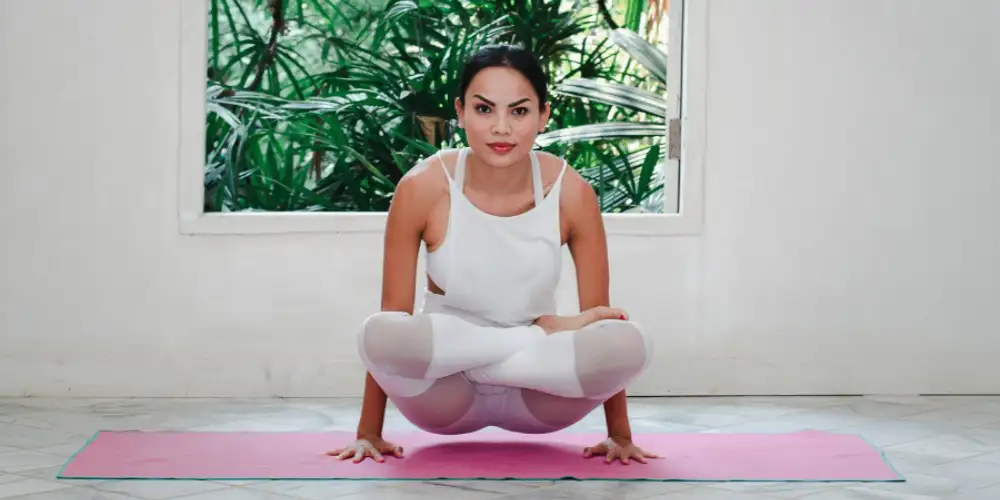
A good yoga mat can make your practice more comfortable and stable, especially when performing poses that involve balancing, kneeling, or placing your hands and feet on the floor. For beginners, choose a mat with good grip, enough cushioning for your joints, and a size that allows you to move comfortably. If you have sensitive knees or wrists, slightly thicker cushioning may provide more comfort, while a thinner mat can offer better stability during standing and balance poses. Keep your mat clean and dry, particularly if you practice regularly.
Consistency is more important than doing long or difficult sessions occasionally. Start with 10–20 minutes, 3–4 days a week, and gradually increase your practice as you become comfortable. Choose a regular time of day that fits your schedule, such as morning or evening. Begin with gentle poses and breathing exercises, then gradually add strengthening, balance, flexibility, and relaxation poses. Keep your practice realistic and enjoyable rather than trying to master advanced poses quickly. If you miss a session, simply return to your routine the next day—regular practice over time is more valuable than perfection.
Yoga is generally considered safe for healthy people when practiced appropriately, but certain individuals may need modifications. Pregnant women, older adults, and people with medical conditions or previous injuries should discuss appropriate poses with their healthcare professional and instructor. People with conditions such as significant knee or hip problems, spinal conditions, severe high blood pressure, balance problems, or glaucoma may need to avoid or modify certain poses.
Beginners should also avoid advanced poses such as headstands, shoulder stands, extreme backbends, and forceful breathing techniques until they have appropriate training and supervision.