10 Best Yoga Poses for Stress Relief and Relaxation
Feeling stressed, overwhelmed, or mentally exhausted? Taking a few minutes for yourself may help you feel calmer. Yoga combines gentle…
Read More →

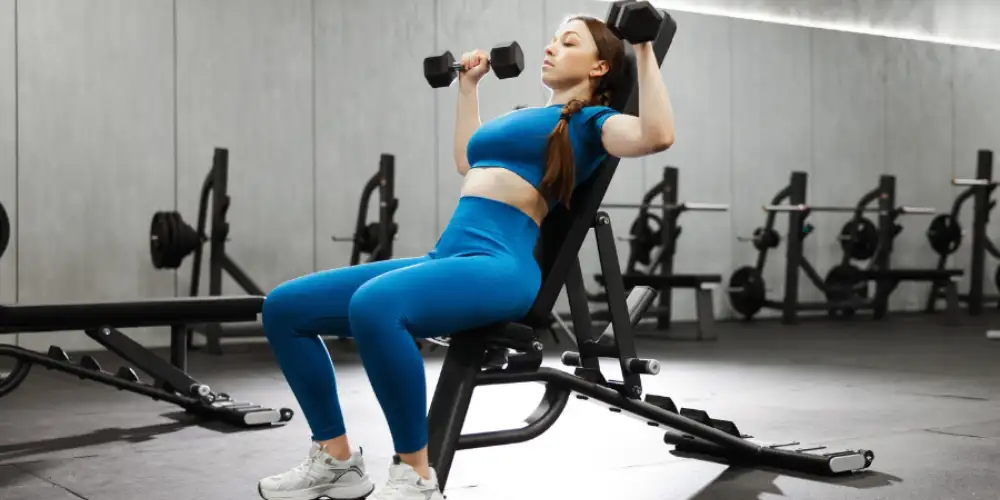
Start simple: Beginners can build an effective full-body routine with basic gym exercises and manageable weights.
Progress gradually: Focus on technique first, then gradually increase resistance, repetitions or training volume.
Support training with nutrition: Eat enough protein and build meals around protein, whole-food carbohydrates, vegetables, fruits and healthy fats.
Starting at the gym can feel overwhelming when you are surrounded by machines, free weights, and people who already seem experienced. The good news is that beginners do not need complicated exercises or extremely heavy weights to make progress.
A simple full-body workout using basic resistance exercises can help you build strength, improve movement, support muscle development, and become more comfortable in the gym. Adults should also work toward at least 2 days of muscle-strengthening activity each week, alongside regular aerobic activity.
The key is to start gradually, learn proper technique, and increase the challenge over time.
Works: Quadriceps, glutes, hips and core.
Hold one dumbbell close to your chest. Stand with your feet around shoulder-width apart. Push your hips back, bend your knees and lower your body while keeping your chest controlled. Push through your feet to return to standing.
Beginner tips:
Modification: If a goblet squat feels difficult, perform bodyweight squats or squat to a bench/box. If mobility is limited, use a comfortable range of motion rather than forcing a deep squat.
Beginner starting point: 2–3 sets of 8–12 repetitions.
Works: Quadriceps, glutes and hamstrings.
Sit securely in the leg-press machine and place your feet comfortably on the platform. Lower the platform under control and press it away without locking your knees aggressively.
Beginner tips:
Modification: Use a lighter load and a smaller range of motion if the full movement is uncomfortable.
Important: Never choose a weight simply because someone else is lifting it.
Works: Latissimus dorsi, upper back and arms.
Sit at the machine, secure your legs and pull the bar toward the upper chest while keeping your torso relatively stable. Slowly return the bar.
Beginner tips:
Modification: If the standard bar feels uncomfortable, ask the gym trainer about a neutral-grip attachment or use a lighter weight.
Starting point: 2–3 sets of 8–12 repetitions.
Works: Upper back, middle back, rear shoulders and arms.
Sit upright, hold the handle and pull it toward your torso while keeping your shoulders controlled. Slowly extend your arms again.
Beginner tips:
Modification: Use a lighter resistance or a different handle if your shoulders or wrists feel uncomfortable.
Works: Chest, shoulders and triceps.
Adjust the seat so the handles are approximately around chest level. Press the handles forward and slowly return them.
Beginner tips:
Modification: If the machine bothers your shoulders, reduce the range of motion or ask a qualified trainer to check your setup. A light dumbbell press may be another option if appropriate.
Works: Hamstrings, glutes and lower-body muscles.
Hold light dumbbells in front of your thighs. Keep your back neutral, slightly bend your knees and push your hips backward while lowering the dumbbells along your legs. Drive your hips forward to return to standing.
Beginner tips:
Modification: Practice the hip-hinge movement with no weights or use a very light resistance before progressing.
Stop if: You experience sharp or significant back pain rather than normal muscular effort.
Works: Shoulders, triceps and upper-body stabilizing muscles.
Sit or stand with light dumbbells near shoulder height. Press them upward in a controlled movement and return them to the starting position.
Beginner tips:
Modification: Use a seated machine shoulder press or lighter dumbbells if controlling free weights is difficult.
People with existing shoulder problems should seek individualized guidance before loading painful movements.
Works: Glutes, quadriceps and legs while challenging balance.
Use a stable, non-slip platform or low step. Place one foot on the platform and step up under control. Step down carefully and repeat.
Beginner tips:
Modification: Lower the step height or perform supported step-ups. If balance is poor, use a machine-based lower-body exercise instead.
Works: Core and trunk muscles.
Place your forearms on the floor, extend your legs and maintain a straight, controlled body position.
Beginner tips:
Modification: Perform the plank with your knees on the floor or use an elevated plank with your hands on a bench.
Beginner starting point: 10–30 seconds for 2–3 sets.
Works: Core stability and resistance to rotation.
Stand sideways to a cable machine, hold the handle close to your chest and press it forward while resisting the cable’s tendency to rotate your torso.
Beginner tips:
Modification: Use a resistance band instead of a cable machine if available.
You do not need to perform all 10 exercises in one session.
A practical beginner session could include:
Lower body: Goblet squat or leg press
Pull: Lat pulldown
Push: Chest press
Hip movement: Romanian deadlift
Shoulders: Dumbbell shoulder press
Core: Plank or Pallof press
Perform around 2 sets of each exercise initially, using a weight that allows you to maintain good technique. As your strength and confidence improve, gradually increase resistance, repetitions, or sets.
NIDDK recommends starting slowly and adding activity gradually, particularly if you have been inactive.
There is no single “correct” weight for everyone.
Choose a resistance that feels challenging toward the end of the set while still allowing you to perform the exercise with controlled technique. You should not need to sacrifice form to complete the final repetitions.
When a particular weight becomes comfortable for your target repetitions, you can gradually increase the resistance.
Progressive overload—not lifting the heaviest weight on day one—is what helps you continue adapting.
Protein is important for maintaining and building muscle, particularly when resistance training is performed consistently.
For people who exercise regularly, sports-nutrition guidance commonly places protein intake around 1.4–2.0 g/kg of body weight per day, although individual needs vary. Research also suggests that increasing protein intake can provide additional, but generally modest, benefits for muscle gain when combined with resistance training.
For example, a 70-kg person using a target of 1.4–1.6 g/kg/day would get approximately 98–112 g of protein per day.
You do not automatically need protein powder.
Choose from:
Whey protein can be convenient if you struggle to get enough protein from food. Plant-based options such as soy or pea protein can also be useful depending on dietary preferences.
Protein powder is a supplement, not a replacement for a balanced diet.
If you have kidney disease or another medical condition requiring dietary protein restrictions, discuss your protein target with your healthcare professional before substantially increasing protein intake.